Writing or Writting: Which Spelling Is Correct? If you have ever paused mid-sentence and wondered whether to type “writing” or “writting,” you are not alone. The answer is simple: “writing” is the only correct spelling. “Writting” is a common misspelling that shows up in emails, social media posts, and even professional documents. In this article, we will explain why “writing” is correct, where the confusion comes from, and how to avoid this mistake for good.
Writing or Writting – Quick Answer
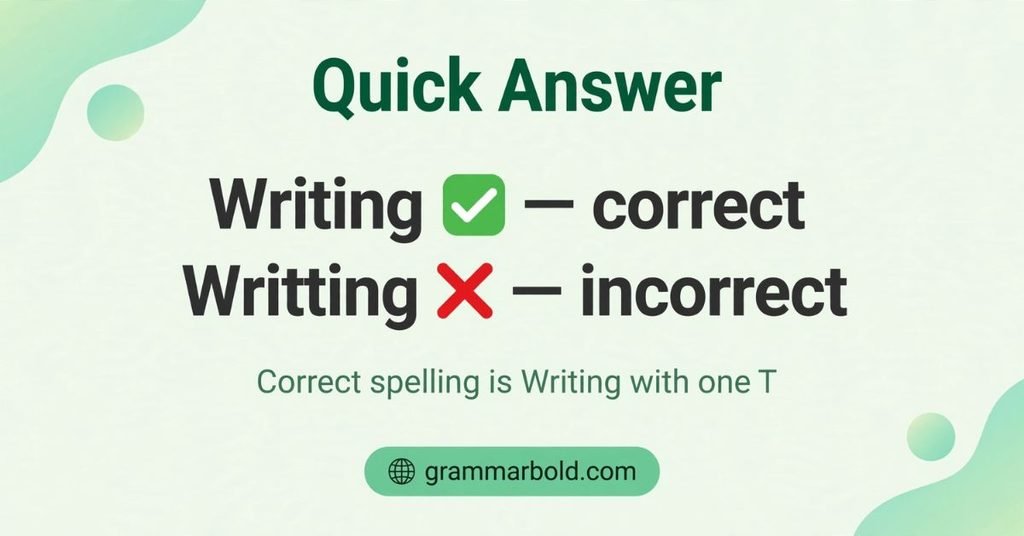
Writing is correct. Writting is not a word in English.
The word comes from the verb write. When you add the ending -ing, you drop the silent e from write and add -ing, which gives you writing. No second “t” is needed.
- ✅ I enjoy writing in the morning.
- ❌ I enjoy writting in the morning.
The Origin of Writing
The word “write” has deep roots in the Germanic family of languages. It traces back to Old English writan, which originally meant to scratch, carve, or engrave. That makes sense when you consider that early writing involved cutting marks into wood, stone, or bark.
Over many centuries, the meaning shifted from carving to forming letters and words with a pen or other tools. The -ing ending is a standard English suffix used to turn verbs into present participles or nouns (called gerunds). So “writing” can describe an action in progress (“She is writing a letter”) or the activity itself (“Writing takes practice”).
British English vs American English Spelling
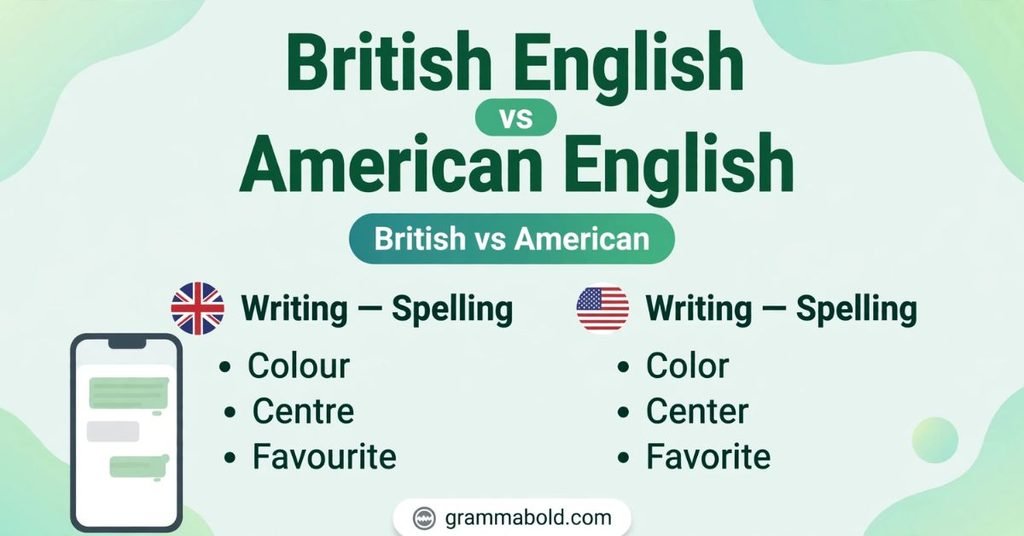
Many English words are spelled differently in British and American English, such as colour and color, or centre and center. Because of this, some people assume “writting” might be an accepted regional variant.
It is not. Both British and American English use writing. There is no dialect, regional standard, or style guide that accepts “writting.”
| Variety | Correct Spelling |
| American English | writing |
| British English | writing |
| Australian English | writing |
| Canadian English | writing |
Why Do People Misspell Writing as Writting?
The error is understandable, and it usually comes from a few predictable sources:
- Confusion with doubled consonants. English often doubles a final consonant before -ing (sit becomes sitting, run becomes running). Writers sometimes apply that pattern to write by mistake.
- Mixing up “write” and “written.” The past participle written does have a double “t,” so the doubled letter can bleed into other forms of the word.
- Typing speed. Fast typists occasionally repeat a letter without noticing.
- Sound-based spelling. The “i” in writing sounds short to some ears, which leads them to think a doubled consonant must follow it.
Which Spelling Should You Use?
Always use writing. This applies to academic papers, business emails, resumes, blog posts, social media, and casual messages alike.
Spell checkers will normally flag “writting,” but not always, especially in headlines, hashtags, usernames, or text typed in a hurry. A quick proofread is worth the effort, since a misspelling of a word this common can make a piece of content look careless.
The Grammar Rule: Why We Drop ‘e’ and Add ‘ing’
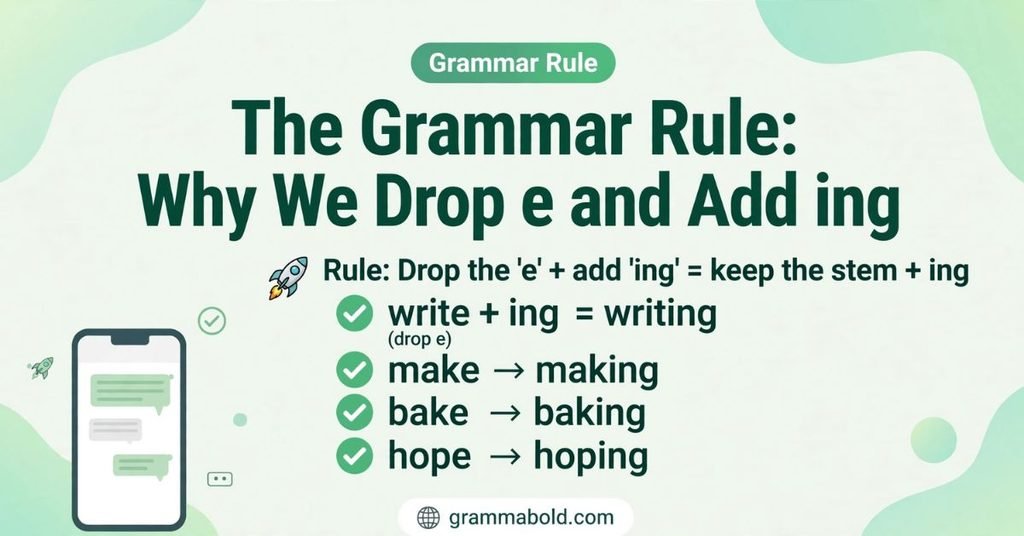
The spelling of writing follows one of the most reliable rules in English: when a word ends in a silent e, drop the e before adding a suffix that starts with a vowel, such as -ing.
Examples of the same rule:
- write → writing
- make → making
- bake → baking
- hope → hoping
- drive → driving
Now compare this with the doubling rule. English doubles the final consonant when a short, stressed vowel is followed by a single consonant at the end of the word, as in sit → sitting or hop → hopping. But write ends in a silent e, and the vowel sound is long, not short. That is exactly why the doubling rule does not apply.
A helpful contrast: write → writing (long “i,” silent e dropped) versus hop → hopping (short “o,” consonant doubled), and hope → hoping (long “o,” silent e dropped).
Common Mistakes with Writing
Beyond the “writting” error, writers often stumble over related words:
- Writeing. Some people keep the e and write “writeing.” That is also wrong, because the silent e must be dropped.
- Writing vs. riding. These are different words with different meanings, though similar sounds can cause mix-ups.
- Right vs. write vs. rite. These homophones sound alike but mean different things: right means correct or a direction, write means to put words on a surface, and rite refers to a ceremony.
- Written vs. writen. The past participle is spelled with two t‘s: written.
- Wrote vs. written. Wrote is the simple past tense (“I wrote a note”), while written needs a helper verb (“I have written a note”).
Writing in Everyday Examples
Here are natural sentences showing the word in different roles.
As a present participle (verb):
- She is writing a thank-you card to her teacher.
- I was writing when the power went out.
As a gerund (noun):
- Writing every day improved his vocabulary.
- Her favorite hobby is writing poetry.
As a noun meaning written work or handwriting:
- The writing on the old letter was almost impossible to read.
- Please put your request in writing.
In compound terms:
- Creative writing, academic writing, and technical writing each have their own style and purpose.
- Content writing is a growing career option for many people.
How to Remember the Correct Spelling of Writing?
A few simple tricks can lock in the right spelling:
- Remember the base word. Start with write, drop the e, and add -ing. That is the whole process.
- Think “one t, long i.” The long “i” sound in writing is a signal that the t stays single.
- Compare it with “hoping” and “making.” You would never double the p in hoping (that gives hopping, a different word), so you do not need to double the t in writing either.
- Use the contrast with “written.” Only written has the double t. Keep that one as the exception.
- Say it slowly. Sounding it out as “wri-ting” can help you visualize one t at the center.
Writing – Google Trends & Usage Data
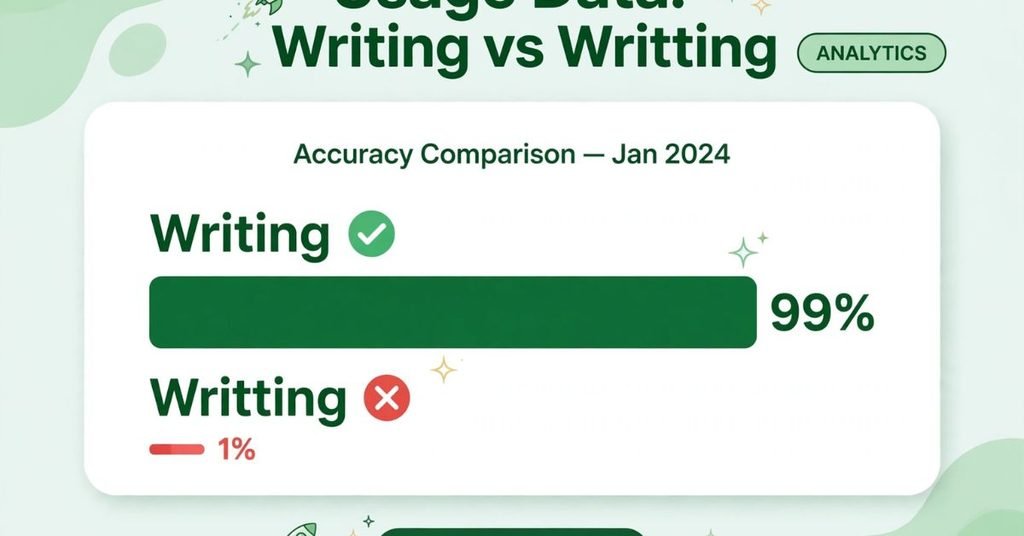
The word “writing” is searched and used constantly across education, business, and creative fields. Search interest in related terms tends to rise around school terms, exam periods, and application seasons, when people look up guidance on essays, grammar, and style.
Misspellings like “writting” also appear regularly in search queries, which is why spelling-check topics attract steady attention. For exact, current figures on search volume and regional interest, you can check Google Trends directly and compare “writing” with “writting” over any time period you choose. The comparison almost always shows “writing” far ahead, as you would expect for the correct form.
Also Read This:https://grammarboad.com/laughing-emoji-meaning/
Is Writting Ever Correct?
No. “Writting” is not accepted in any standard dictionary, style guide, or version of English.
There are only a few rare situations where you might see it:
- A deliberate typo or joke in informal or humorous content.
- A brand name or username that is intentionally spelled that way.
- An example of a common error, as in this article.
In every normal context, such as school, work, publishing, or online content, you should use writing.
Other Words You Spell Wrong Like Writting
“Writting” is far from the only word that trips people up. Many errors come from the same kind of confusion over doubled letters or silent letters. Here are some frequent examples:
| Incorrect | Correct |
| comming | coming |
| haveing | having |
| useing | using |
| writting | writing |
| definately | definitely |
| recieve | receive |
| occured | occurred |
| begining | beginning |
| writeing | writing |
| mispell | misspell |
Notice that some errors come from not doubling a letter when you should (begining, occured), while others come from doubling one when you should not (comming, writting). The best fix is to learn the rule behind each word rather than memorizing every one separately.
Comparison Table: Writing vs Writting
| Feature | Writing | Writting |
| Correct spelling | Yes | No |
| Found in dictionaries | Yes | No |
| Accepted in British English | Yes | No |
| Accepted in American English | Yes | No |
| Base word | write | None |
| Grammar rule followed | Drop silent e, add -ing | Incorrectly doubles the t |
| Safe for professional use | Yes | No |
FAQs
Is it “writing” or “writting”?
The correct spelling is “writing.” “Writting” is a misspelling.
Why is writing spelled with one t?
The verb write ends in a silent e. When adding -ing, you drop that e and do not double the consonant, so only one t remains.
Is “writting” a British spelling?
No. British English also uses “writing.” There is no regional variation that accepts “writting.”
Is “written” spelled with two t’s?
Yes. Written is the past participle of write and is spelled with a double t. This is a different word form from writing.
How do you spell writing in the past tense?
The past tense of write is wrote, and the past participle is written. “Writing” is the present participle or gerund, not a past form.
What is the easiest way to avoid this mistake?
Remember the rule: write + -ing means drop the e and add -ing. That gives you writing every time.
Which is correct, Writing or Writting?
When we talk about Writing or Writting, the correct spelling is Writing. The spelling Writting is always wrong. So if you are confused about Writing or Writting, always use Writing.
Why do people get confused between Writing or Writting?
People get confused in Writing or Writting because the past form is Written with double T. But for Writing or Writting, the rule is different. You just remove ‘e’ and add ‘ing’, so Writing is correct.
Is Writting ever correct?
No, Writting is never correct in English. In all dictionaries, when you search Writing or Writting, only Writing is marked correct. Writting is listed as a misspelling of Writing.
How to remember the correct spelling for Writing or Writting?
A simple trick to remember Writing or Writting is: Write + ing = Writing. We drop the ‘e’ from Write, we never double the ‘t’. This is the main rule for Writing or Writting.
Conclusion
The question of “writing or writting” has a clear answer: writing is correct, and writting is always a mistake. The spelling follows a dependable English rule: drop the silent e from write before adding -ing. The double t belongs only to written, not to writing.
Keep the base word in mind, use the contrast with hoping and making, and proofread carefully when you are typing quickly. With these habits, you will spell writing correctly every time, in any kind of text you create.






1 thought on “Writing or Writting: 7 Powerful Reasons Why Writing is Correct”