Have you ever stopped while writing and wondered whether the correct spelling is “chief” or “cheif”? You are not alone. Chief vs Cheif is a common spelling confusion in English because the letters “i” and “e” are easy to put in the wrong order. This guide explains the difference between chief and cheif, why this spelling mistake happens, and five simple tips to help you remember the correct spelling.
Chief vs Cheif: The Quick Answer
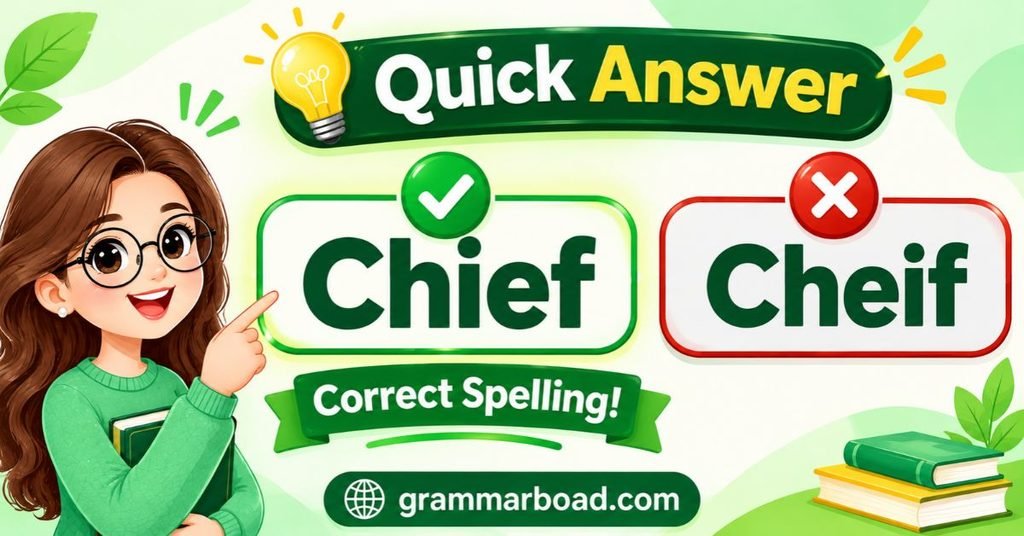
Chief is the correct spelling. Cheif is a misspelling and is not recognized as a standard English word.
The correct order of the letters is C-H-I-E-F, with the “i” coming before the “e.” In Chief vs Cheif, remembering the correct letter order can help you avoid this common spelling mistake. If you remember only one thing from this article, remember this spelling.
What Does Chief Mean?
Chief refers to someone or something that holds the highest position, rank, or importance. In the Chief vs Cheif spelling comparison, chief is the correct word. As a noun, it describes a person who leads or holds the highest position in a group or organization. As an adjective, it describes something that is most important or serves as the main priority.
You can find the word chief in everyday conversations and professional settings, from “the chief of police” to “the chief reason for the delay.”
Why Is “Cheif” Incorrect?
“Cheif” is incorrect because the letters “i” and “e” are in the wrong order. In Chief vs Cheif, the correct spelling is “chief,” with “i” before “e.”
The word “chief” comes from Old French chief, which originated from the Latin word caput, meaning “head.” Over time, its spelling became established as “chief.”
Because “cheif” is not an accepted standard English spelling, it is generally flagged by spell-checking tools. Using the incorrect spelling in an email, school paper, résumé, or published article can make your writing look less professional.
Chief: Definition and Meaning
In its broadest sense, chief means highest in rank, authority, or importance. In the Chief vs Cheif spelling comparison, understanding the meaning of chief is just as important as remembering its correct spelling. The idea of being at the top runs through its different uses, whether it describes a person in charge or something that has the greatest importance.
Chief as a Noun
As a noun, a chief is a leader or a person who holds the highest position in a group or organization. In Chief vs Cheif, the word “chief” is the correct spelling when referring to someone with leadership or authority.
Here are some examples:
- The chief of the fire department addressed the crowd.
- She was promoted to chief of the department after ten years.
- The tribal chief was respected for his wisdom.
In these sentences, “chief” refers to a person who holds a leading position or has authority over others.
Chief as an Adjective
As an adjective, chief describes something that is the main, most important, or most significant in a particular situation. In Chief vs Cheif, “chief” is the correct spelling when describing something that has the greatest importance or priority.
Here are some examples:
The chief advantage of the plan is its simplicity.In these examples, “chief” has a similar meaning to “main” or “primary.”
Rising costs were the chief cause of the company’s problems.
His chief concern was keeping the team safe.
How Do You Spell Chief?
The correct spelling in Chief vs Cheif is C-H-I-E-F.
It contains five letters and one syllable. The word begins with “ch,” followed by “ie,” and ends with “f.”
Remember that the “i” comes before the “e.” This simple detail will help you avoid writing “cheif” by mistake and remember the correct spelling of chief.
How Do You Pronounce Chief?
The word chief is pronounced /tʃiːf/. It rhymes with words such as “brief,” “thief,” “grief,” and “belief.”
The letters “ie” create a long “ee” sound, making the word easy to pronounce once you know the correct spelling. In Chief vs Cheif, remembering this pronunciation can also help you remember that “chief” is the correct spelling.
Remembering these rhyming words can help you avoid the common spelling mistake “cheif.”
Why Do People Write “Cheif” Instead of “Chief”?
There are several reasons why people accidentally write “cheif” instead of “chief.”
- Letter swapping: The letters “i” and “e” are easy to reverse when typing quickly, especially if you are not paying close attention.
- Confusion with the “ei” pattern: Many familiar English words use “ei,” such as receive, weight, and their. This can make the incorrect spelling “cheif” look believable.
- Rushed typing: When people write quick messages, emails, or notes, they may not take enough time to check their spelling.
- Confusion about spelling rules: Many people remember the “i before e” spelling rule but are unsure about its exceptions. This confusion can lead them to write “cheif” instead of “chief.”
Chief vs Cheif in a Sentence
Looking at both spellings side by side makes the difference easier to understand.
| Incorrect | Correct |
| The cheif of staff arrived early. | The chief of staff arrived early. |
| Her cheif goal is to finish by Friday. | Her chief goal is to finish by Friday. |
| He was named cheif editor last year. | He was named chief editor last year. |
| Our cheif concern is customer safety. | Our chief concern is customer safety. |
In every example, the spelling with “ie” is correct, while “cheif” is a spelling mistake.
Common Phrases With Chief
The word chief appears in many everyday expressions, professional titles, and formal phrases. In Chief vs Cheif, knowing how to use the correct spelling in common phrases can help you improve your English writing.
Here are some common examples:
Chief Concern / Chief Reason: The most important worry or primary cause.These expressions show how the word chief is used in different situations.
Chief Executive Officer (CEO): The highest-ranking executive in a company.
Chief of Staff: A senior person who manages the office and supports a leader.
Chief Justice: The presiding judge of a high court.
Chief Complaint: The main reason a patient seeks medical attention.
Commander-in-Chief: The supreme commander of a country’s armed forces.
Fire Chief / Police Chief: The head of a fire or police department.
Chief Among Equals: The most prominent member of a group whose members have equal status.
Chief vs Leader: Are They the Same?
The words chief and leader have similar meanings, but they are not exactly the same. Understanding this difference is helpful when learning Chief vs Cheif and how to use the correct word in English.
A leader is someone who guides, influences, or directs other people. This role can be formal or informal. A chief usually refers to someone who holds a formal title or the highest position in an organization or group.
For example, a teammate who inspires and motivates colleagues can be called a leader. However, someone with the official title of “Chief Operating Officer” is a chief.
As an adjective, chief also means main or most important. For example, you can say “the chief reason,” but you would not normally say “the leader reason.”
Is “Cheif” Ever Correct?
In standard English, no. “Cheif” is not a recognized standard English word or an accepted alternative spelling of “chief.”
It may occasionally appear as a deliberately chosen username, brand name, or personal name. However, these are special uses rather than standard spelling.
In normal writing, always use chief instead of cheif.
How to Remember the Correct Spelling of Chief
The easiest way to remember the correct spelling of chief is to connect it with other familiar English words that use the same “ie” letter combination.
Here are some examples:
- Brief
- Thief
- Grief
- Field
- Piece
These words can help you become more familiar with the “ie” spelling pattern.
Remember that chief follows the same letter order. The “i” comes before the “e.”
Chief vs Cheif: Common Mistakes to Avoid
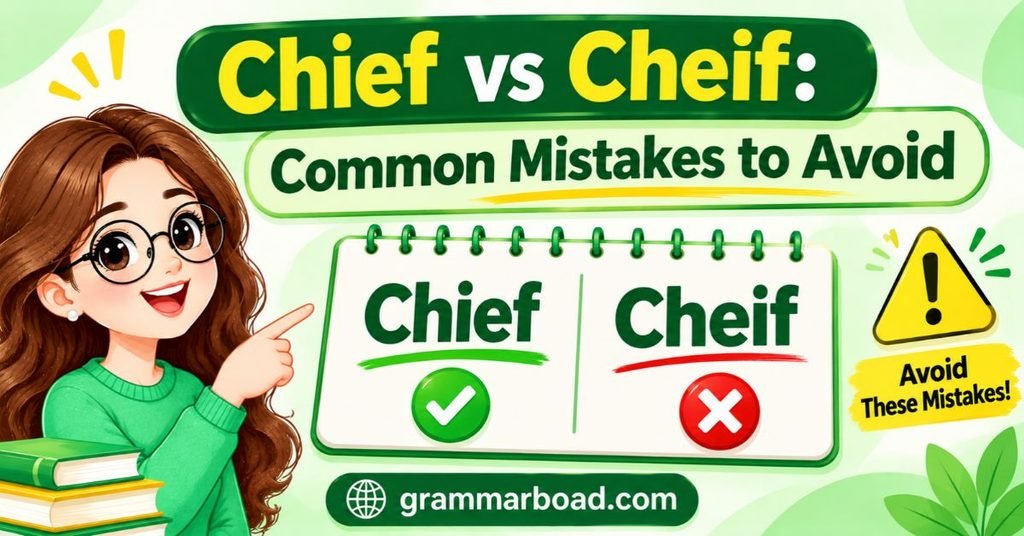
When using the word chief, watch out for these common spelling and word-choice mistakes:
- Writing “cheif” in titles: Professional job titles such as “Chief Financial Officer” often appear in formal documents. Always double-check the spelling before publishing or submitting your work.
- Misspelling related words: Words such as mischief and handkerchief also contain the letter sequence “chief.” Be careful not to write them as “mischeif” or “handkercheif.”
- Confusing “chief” with “chef”: A chef is a professional cook, while a chief is a leader or something of primary importance. Although the words share a Latin origin, they have different spellings and meanings.
- Relying entirely on autocorrect: Spell-checking tools can help identify mistakes, but they should not replace careful proofreading.
Avoiding these mistakes will help make your English writing clearer and more accurate.
Chief vs Cheif: A Simple Comparison
The following table highlights the main differences between the correct and incorrect spellings.
| Feature | Chief | Cheif |
| Correct spelling | Yes | No |
| Standard dictionary word | Yes | No |
| Letter order | C-H-I-E-F | C-H-E-I-F |
| Meaning | Leader or most important | No standard meaning |
| Use in writing | Correct | Incorrect |
As the table shows, chief is the only accepted standard spelling.
5 Easy Tips to Remember the Spelling of Chief
Here are five simple tips to help you remember the correct spelling of chief and avoid writing cheif.
1. Remember the “ie” Letter Order
The word chief uses “ie,” not “ei.” Remembering the correct order of these two letters is the easiest way to avoid this spelling mistake.
2. Rhyme It With “Brief” and “Thief”
Think of words such as “brief” and “thief.” They have the same ending sound and use the same “ie” letter combination as chief. If you remember how to spell these words, remembering chief becomes easier.
3. Say “Hi” to the Chief
Look closely at the spelling: C-H-I-E-F. You can spot the letters “HI” inside the word. Imagine saying “Hi” to your boss or leader. This little memory trick can help you remember that “i” comes before “e.”
4. Connect It With “Mischief” and “Handkerchief”
The words mischief and handkerchief contain the same “chief” letter sequence. Remembering these familiar words can reinforce the correct spelling pattern.
5. Proofread for Letter Swaps
Whenever you finish writing, check words that contain “ie” and “ei.” Pay special attention to the letters in chief to make sure you have not accidentally switched their positions.
A quick review can help you catch spelling mistakes before publishing your work.
Synonyms and Antonyms of Chief
Learning synonyms and antonyms can help you understand the meaning of chief and use it more effectively in English.
Synonyms of Chief (As a Noun):
- Head
- Leader
- Boss
- Director
- Commander
- Principal
- Ruler
Synonyms of Chief (As an Adjective):
- Main
- Primary
- Principal
- Key
- Central
- Foremost
- Leading
Antonyms of Chief (As a Noun):
- Subordinate
- Follower
- Underling
- Junior
Antonyms of Chief (As an Adjective):
- Minor
- Secondary
- Lesser
- Unimportant
- Peripheral
These words can help you understand how chief relates to leadership, rank, and importance.
Also Read This:https://grammarboad.com/successful-vs-succesful/
Real-Life Examples of Chief in English
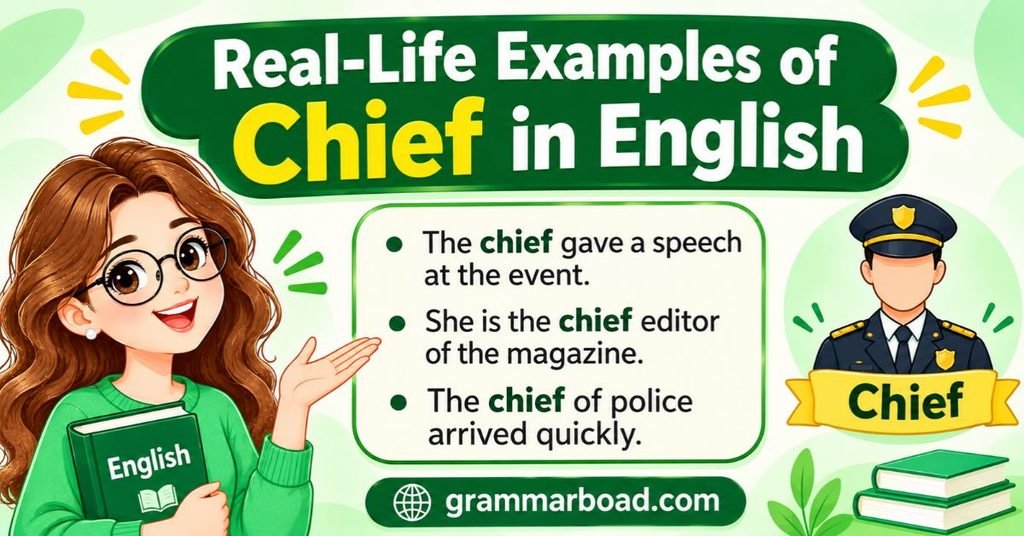
Here are some natural examples showing how the word chief is used in different situations.
- News: The city’s police chief announced new safety measures on Monday.
- Business: As chief marketing officer, she oversees the company’s brand strategy.
- Medicine: The patient’s chief complaint was a persistent headache.
- Everyday Speech: My chief reason for moving was the shorter commute.
- Writing: The chief editor reviewed every article before publication.
These examples show how chief can describe a person in a leading position or something that is most important.
FAQs
1. Is it chief or cheif?
The correct spelling is chief. “Cheif” is a common spelling mistake and is not accepted in standard English.
2. What does chief mean?
Chief means the highest in rank, authority, or importance. As a noun, it refers to a leader or person in charge. As an adjective, it describes something that is main or most important.
3. Does chief follow the “i before e” rule?
Yes. The word chief uses “ie,” with the “i” coming before the “e.” However, it is better to remember the actual spelling rather than rely entirely on this general rule, which has many exceptions in English.
4. How do you pronounce chief?
Chief is pronounced /tʃiːf/, which sounds like “cheef.” It rhymes with words such as “brief” and “thief.”
5. Is chief the same as chef?
No. A chef is a professional cook, while a chief is a leader or someone or something of the highest importance. Although the words share a Latin origin, their meanings and spellings are different.
6. Can I ever use “cheif”?
In standard English, no. “Cheif” is an incorrect spelling of chief. It may appear as a deliberately chosen username or brand name, but it should not be used in normal English writing.
Conclusion
When comparing Chief vs Cheif, the answer is simple: chief is the only correct standard English spelling. The mistake usually happens when people accidentally switch the positions of “i” and “e” or become confused by different English spelling patterns.
You can remember the correct spelling by connecting chief with words such as “brief” and “thief,” using simple memory tricks, and proofreading your writing carefully. Once you become familiar with the correct letter order, you will find it much easier to spell chief correctly every time.