Skiis vs Skis is a common spelling confusion in English. Have you ever stopped mid-sentence wondering whether the plural of ski has two i’s? You’re not alone. The confusion often comes from the word skiing, which contains a double i. However, skis is the correct plural spelling, while skiis is incorrect in standard English. This guide explains the difference and shares 5 easy tips to help you remember the correct spelling.
Quick Answer
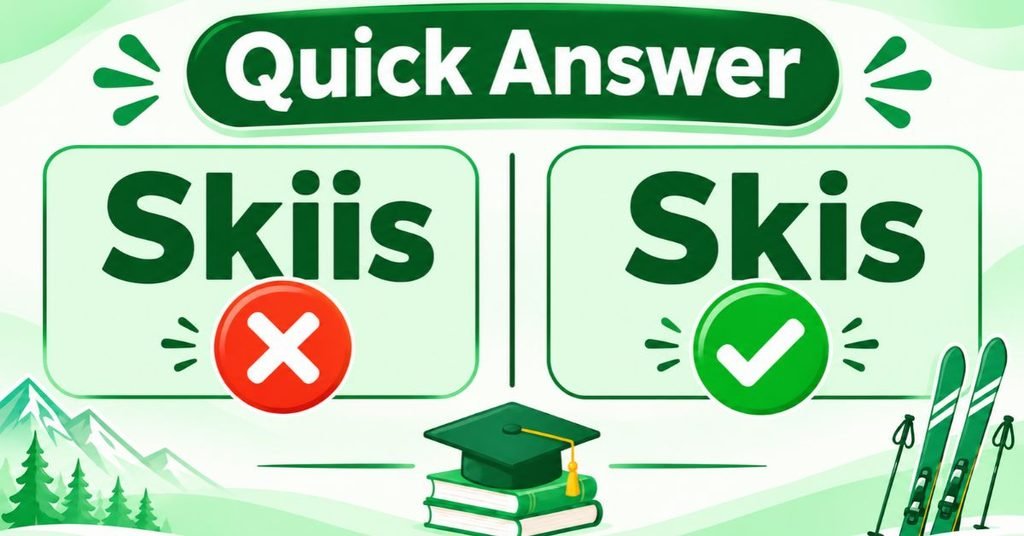
The Skiis vs Skis spelling difference is simple: skis is correct, while skiis is incorrect.
The plural of ski is skis. Just add a single s, as you would with most English nouns.
- Correct: He packed two pairs of skis for the trip.
- Incorrect: He packed two pairs of skiis for the trip.
“Skiis” is not a standard English spelling, so avoid using it in regular writing.ting.
Skiis vs Skis: Why Is “Skis” Correct?
English forms the plural of most nouns by adding -s to the base word. Ski follows the same rule. The word already ends in i, so adding s gives you skis. Nothing else changes.
Many other nouns ending in i behave the same way:
- taxi → taxis
- kiwi → kiwis
- bikini → bikinis
- alibi → alibis
None of them takes a second i in the plural, and neither does ski.
When learning Skiis vs Skis, remember that the correct plural form needs only one s.
What Does “Skis” Mean?
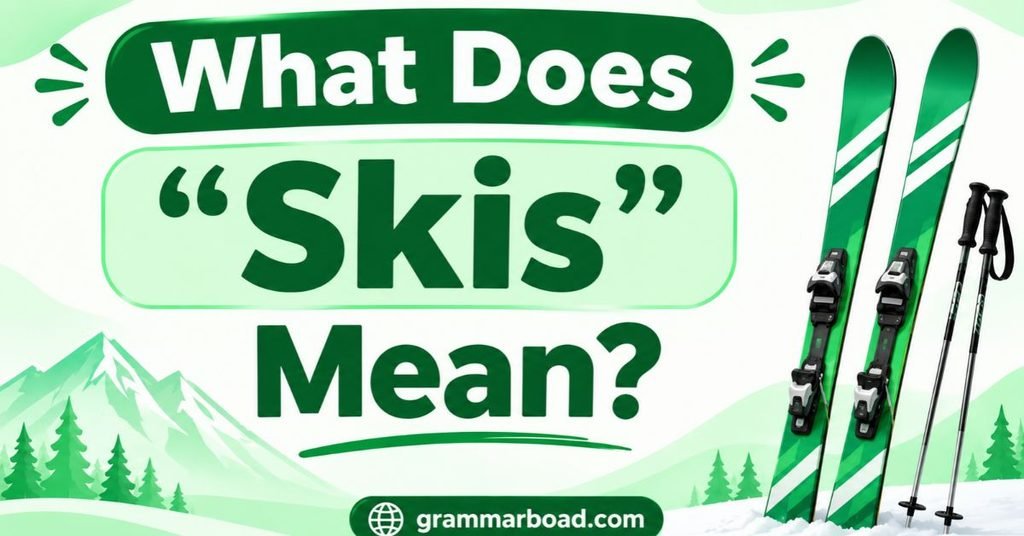
A ski is a long, narrow piece of equipment, usually made of wood, plastic, or composite materials. It is attached to a special boot using bindings and allows a person to glide over snow. Skis is the plural form and usually refers to a pair or more than one of these pieces of equipment.
The word ski entered English from Norwegian, which traces back to Old Norse. That Scandinavian origin is one reason its spelling can feel unusual to English speakers.
You’ll often see it in phrases like:
- a pair of skis
- cross-country skis
- rental skis
- waxing your skis
Ski, Skis, Skiing, or Skied?
Ski works as both a noun and a verb, and each form has its own job. Understanding Skiis vs Skis also helps you recognize the correct spelling in different sentences.
- Ski: The base form of the noun or verb. I ski every winter. She left one ski behind.
- Skis: The plural noun or the third-person singular verb. His skis are new. He skis on weekends.
- Skiing: The activity or the present participle. Skiing is her favorite sport. They are skiing today.
- Skied: The past tense and past participle. We skied all morning.
Notice that skiing is the only form with a double i. This is one reason people confuse Skiis vs Skis, but the plural form always uses just one i followed by s.
Is “Skis” Also a Verb?
Yes. When ski is used as a verb, skis is the form that goes with he, she, it, or any singular subject in the present tense. Understanding Skiis vs Skis helps you recognize why skis is the correct form.
- She skis down the same slope every morning.
- My brother skis better than I do.
So, “skis” can be a plural noun (two skis) or a present-tense verb (he skis). The spelling stays the same in both cases, and skiis is never the correct standard spelling. same either way.
Why Do People Write “Skiis”?
There are a few understandable reasons:
- The “skiing” effect. Because skiing contains two consecutive i’s, it’s easy to carry that pattern over to the plural.
- Pronunciation. Skis sounds like “skeez,” with a long ee sound, and some writers try to show that sound by doubling the vowel.
- Unfamiliar origin. The word isn’t originally English, so its spelling doesn’t always feel intuitive.
- Autopilot typing. Typing ski and then adding is out of habit can produce skiis.
Once you know the cause, the error is easier to avoid. The -ing ending creates the double i in skiing. The plural ending doesn’t.
Skis vs Skies: What’s the Difference?
These two look alike but are unrelated. Understanding Skiis vs Skis can also help you avoid confusing skis with skies.
- Skis: Equipment used for gliding on snow.
- Skies: The plural of sky.
Compare:
- The skis were leaning against the cabin wall.
- The skies turned gray before the storm.
If you mean the air above you, write skies. If you mean gear for snow sports, write skis. Remember, in Skiis vs Skis, skis is the correct spelling for snow equipment.lopes, write skis.
Skis vs. Ski’s vs. Skis’
Apostrophes cause plenty of trouble here, so here is how to sort them out:
- Skis: A plain plural with no ownership. The skis are on sale.
- Ski’s: Singular possessive, something belonging to one ski. The ski’s binding is loose.
- Skis’: Plural possessive, something belonging to several skis. The skis’ edges need sharpening.
Never use an apostrophe just to make ski plural. “Two ski’s” is incorrect.
Is “Skis” the Same in American and British English?
Yes. Both American and British English use skis as the plural. When comparing Skiis vs Skis, there is no regional spelling difference because skis is correct in both varieties. Unlike pairs such as catalog and catalogue, the spelling remains the same. The related forms skiing and skied are also identical in American and British English.
Ski as a Modifier
When ski describes another noun, it normally stays singular, even if you’re talking about several items. It works much like an adjective:
- ski boots
- ski resort
- ski lift
- ski jacket
- ski season
You wouldn’t write “skis resort” or “skis boots.” Keep it as ski whenever it describes something else.
Examples of “Skis” in Real Sentences
Seeing a word in context is one of the fastest ways to remember its spelling:
- She bought a new pair of skis before the season started.
- The shop rents skis, boots, and poles by the day.
- He carried his skis over his shoulder to the lift.
- Cross-country skis are narrower than downhill skis.
- My cousin skis whenever she visits the mountains.
- Those skis are too long for a beginner.
Common Mistakes With “Ski”
These are the errors that come up most often:
- Writing “skiis” instead of skis.
- Using an apostrophe for a simple plural, as in “two ski’s.”
- Confusing “skis” with “skies.”
- Writing “ski’d” for the past tense. The standard form is skied.
- Pluralizing the modifier, as in “skis boots” instead of ski boots.
5 Easy Tips to Remember the Correct Spelling
- Just add s. Treat ski like any regular noun: one ski, two skis.
- Compare it with taxi. You would never write “taxiis,” so don’t write “skiis.”
- Remember that only skiing doubles the i. The double i comes from adding -ing and never carries over to the plural.
- Say it out loud. Skis rhymes with “keys,” and that sound doesn’t need an extra letter.
- Do a quick check. If you’re about to type two consecutive i’s, ask whether you’re adding -ing. If not, delete one.
These tips make Skiis vs Skis easier to remember and help you avoid spelling errors.
How to Use “Skis” in Everyday English
Whether you’re writing a travel blog, a product description, or a quick message, skis fits many everyday situations:
- Shopping and gear: These all-mountain skis are great for varied terrain.
- Travel and holidays: We rented skis at the base of the slope.
- Sports talk: He tuned his skis before the race.
- Verb use: She skis every Saturday in winter.
Match the form to your sentence: ski for one, skis for more than one, skiing for the activity, and skied for the past.
Singular vs. Plural: Ski or Skis?
Use ski for one and skis for more than one.
- He lost a ski on the way down. (one)
- He lost both skis on the way down. (two)
Skis are normally sold and used in pairs, so the plural form appears most often. To be precise about a pair, say a pair of skis. In that phrase, pair is singular but skis is plural.
When Should You Use the Word “Skis”?
Use skis when:
- You’re talking about more than one ski.
- You mean a pair of skis as equipment.
- You’re using ski as a present-tense verb with a singular subject, as in she skis.
Choose a different form when:
- You mean just one ski: ski.
- You’re describing the activity: skiing.
- You’re talking about the past: skied.
- You mean the atmosphere above you: skies.
Also Read This:https://grammarboad.com/of-course-or-ofcourse/
How to Avoid the Common “Skiis” Spelling Mistake
A few small habits will help you avoid this mistake:
- Proofread for double i’s. Scan your writing for “ii” and check whether it belongs, as in skiing.
- Use spellcheck, but don’t rely on it alone. Most tools flag skiis, but they won’t catch a mix-up between skis and skies.
- Read your sentence aloud. If you mean the snow equipment and the word sounds like “skeez,” the correct spelling is skis.
- Keep one simple rule in mind: One ski, two skis, and only skiing gets the double i.
FAQs
Is “skiis” ever correct?
No. In standard English, the plural of ski is always skis.
Why does “skiing” have two i’s but “skis” doesn’t?
In skiing, the second i is part of the -ing ending added to ski. The plural ending is just -s, so there’s no second i.
What is the past tense of “ski”?
The past tense is skied, as in We skied all afternoon.
Is it “a pair of skis” or “a pair of ski”?
It’s a pair of skis. Use the plural form after pair of.
Do I write “ski boots” or “skis boots”?
Write ski boots. When ski describes another noun, it stays singular.
Conclusion
The main lesson from Skiis vs Skis is simple: always use skis when you mean more than one ski.
The correct plural of ski is skis, while skiis is an incorrect spelling in standard English. The confusion comes from skiing, which has a double i because of the -ing ending. Remember the difference between Skiis vs Skis, compare it with words like taxi and kiwi, and avoid common spelling mistakes. With these simple tips, you’ll get the spelling right every time.