Requestor vs Requester is a common spelling question in English. Both words refer to a person or system that makes a request, but requester is more common in everyday writing, while requestor is often used in legal, technical, and administrative contexts. In this guide, you will learn their meanings, differences, correct usage, and examples.
Although the two words have the same basic meaning, understanding their usage can help you choose the right form for your writing. In this guide, you will learn the difference between requestor and requester, their origins, spelling patterns, and common uses. You will also find practical examples, a comparison table, and helpful tips to avoid mistakes.
Requestor or Requester – Quick Answer
The main difference between Requestor vs Requester is their spelling and usage, not their basic meaning.
Requester is generally the more common and widely preferred spelling in everyday English. Requestor is also an accepted variant and appears in certain professional, legal, administrative, and technical contexts.
Both words refer to a person, organization, or system that makes a request. Their meaning is essentially the same, so the choice usually depends on the writing style, workplace terminology, or document you are using.
Here are five key differences:
- Popularity: Requester is more common in general English writing, while requestor is less frequently used.
- Spelling: Requester ends in -er, whereas requestor ends in -or.
- Professional usage: Requestor sometimes appears in official forms, legal documents, and technical systems.
- Everyday communication: Requester is usually the more natural choice for emails, articles, and ordinary sentences.
- Consistency: Both forms can be correct, but you should follow the spelling used by your organization or document.
If you are unsure which spelling to choose, requester is a sensible default for general writing.
The Origin of Requestor or Requester
Both requestor and requester are formed from the verb request, which means to ask for something formally or politely. The word request entered English through French and has roots in Latin.
English uses different endings to describe a person who performs an action. Two common endings are -er and -or.
The suffix -er appears in familiar words such as:
- Teacher
- Writer
- Builder
- Speaker
- Driver
The suffix -or appears in words such as:
- Actor
- Editor
- Visitor
- Creator
- Director
Because English uses both endings to form nouns, requestor and requester developed as alternative forms. The spelling requester follows a familiar English pattern, while requestor uses the other common agent-noun ending.
Over time, requester became the more widely used form in general writing. However, requestor continued to appear in particular industries and official documents.
British English vs American English Spelling
Some English spelling differences are strongly connected to geography. For example, American English generally uses color, while British English uses colour. Similarly, American English often uses organize, while British English commonly accepts organise.
However, requestor and requester do not follow the same clear regional pattern.
Both spellings can be found in British and American English. Neither is exclusively British or exclusively American. Their use is more closely connected to an organization’s preferred terminology, a particular industry, or the style of a document.
For example, a company in the United States may use requester in its support emails, while a technical system may display the label requestor. The same variation can occur in British organizations.
Therefore, do not assume that one spelling is correct only in the United States or the United Kingdom. Instead, consider your audience and follow the spelling used in the document or organization.
Which Spelling Should You Use?
Choosing between requestor and requester is usually straightforward when you consider the context.
Use these practical guidelines:
- Choose requester for general writing: It is the more familiar spelling in everyday English.
- Follow your organization’s style guide: If your workplace prefers requestor, use that form in its documents.
- Match existing terminology: When completing a form or describing a software field, copy the spelling shown in the original source.
- Stay consistent: Avoid switching between requestor and requester in the same document without a clear reason.
- Consider your readers: Use the form that your audience is most likely to recognize.
For example, in a general email, you might write, “The requester will receive a confirmation message.” If your company’s application uses the label “Requestor Details,” it makes sense to keep that exact wording when explaining the application.
The most important point is consistency. Both spellings communicate the same basic meaning, but using one form throughout your writing makes your work look more professional.
When comparing Requestor vs Requester, remember that requester is usually the preferred choice for general English writing.
Common Mistakes with Requestor or Requester
Understanding Requestor vs Requester helps writers avoid common spelling mistakes. Writers sometimes make mistakes when choosing or using these two words. Most problems happen because they assume one spelling is always incorrect or forget to keep their writing consistent.
Knowing the difference between Requestor vs Requester can help you avoid spelling errors in formal and professional writing.
Here are some common mistakes to avoid:
- Treating requestor as a spelling error: Requestor is an accepted variant, even though requester is more common.
- Mixing both spellings: Using requestor in one section and requester in another can make a document look inconsistent.
- Assuming a regional difference: Neither spelling belongs exclusively to British or American English.
- Using the wrong word form: Requester and requestor describe the person making a request. Request is the action or thing being asked for.
- Using unnecessary formal language: In some sentences, phrases such as “the person making the request” may be easier to understand.
- Making plural errors: The regular plural forms are requesters and requestors.
For clear writing, choose the spelling that fits your context and use it consistently.
Requestor or Requester in Everyday Examples
Both words can describe someone who asks for information, assistance, permission, or a service. The following examples show how they work in everyday situations.
Examples with requester:
- The requester asked for a copy of the receipt.
- Each requester receives a confirmation email.
- The requester must provide accurate contact information.
- The manager contacted the requester for additional details.
- Only the original requester can cancel the application.
Examples with requestor:
- The requestor must complete the application form.
- The system sends an update to the requestor.
- The requestor provided the required documents.
- Please enter the requestor’s name in this section.
- The requestor can check the status of the application online.
These examples show that both spellings can be used in similar situations. The difference is not their basic meaning but the spelling convention followed by the writer or organization.
Requestor or Requester – Usage Trends and Search Interest
The words requestor and requester appear in different types of written communication. Requester is generally the more familiar form in everyday English, while requestor is also used in specialized settings.
Search interest can provide another way to explore how people use these spellings. Google Trends allows users to compare search terms over a selected period and in different countries.
To compare the two words, enter requestor and requester in Google Trends. You can select a country, adjust the time range, and examine their relative search interest.
Remember that Google Trends shows relative search interest rather than the exact number of times a word is used. Its results can also change depending on the selected country and time period.
For that reason, avoid presenting a specific popularity percentage unless you have checked the data and recorded the relevant date and filters.
For ordinary writing, requester remains a useful default. However, requestor may be the better choice when you are following an existing technical or organizational term.
Comparison Table: Requestor vs Requester
This Requestor vs Requester comparison highlights the key differences between the two spellings.
| Feature | Requester | Requestor |
|---|---|---|
| Meaning | A person or system making a request | A person or system making a request |
| Spelling ending | -er | -or |
| General usage | More common in everyday writing | Less common in general writing |
| Professional use | Used in business and technical writing | Appears in some formal and technical settings |
| Regional use | Used in British and American English | Used in British and American English |
| Tone | Neutral | Can sound more official in some contexts |
| Plural form | Requesters | Requestors |
| Best general choice | Recommended default | Use when required by context |
The table makes one point clear: both words have the same basic meaning. Requester is usually the safer choice for general writing, while requestor can be appropriate when a particular document or system uses it.
What Does Requestor Mean in Simple English?
A requestor is a person, organization, or system that asks for something. The word identifies the individual or party making a request.
For example, imagine that you submit a form to request a copy of an official document. In a system that uses the spelling requestor, you may be identified as the requestor.
Here are a few situations:
- A customer asking for a refund.
- An employee requesting access to a company account.
- A person applying for an official record.
- A user submitting a technical support ticket.
In each situation, the requestor is the person or party making the request. The word has the same basic meaning as requester.
What Does Requester Mean in Simple English?
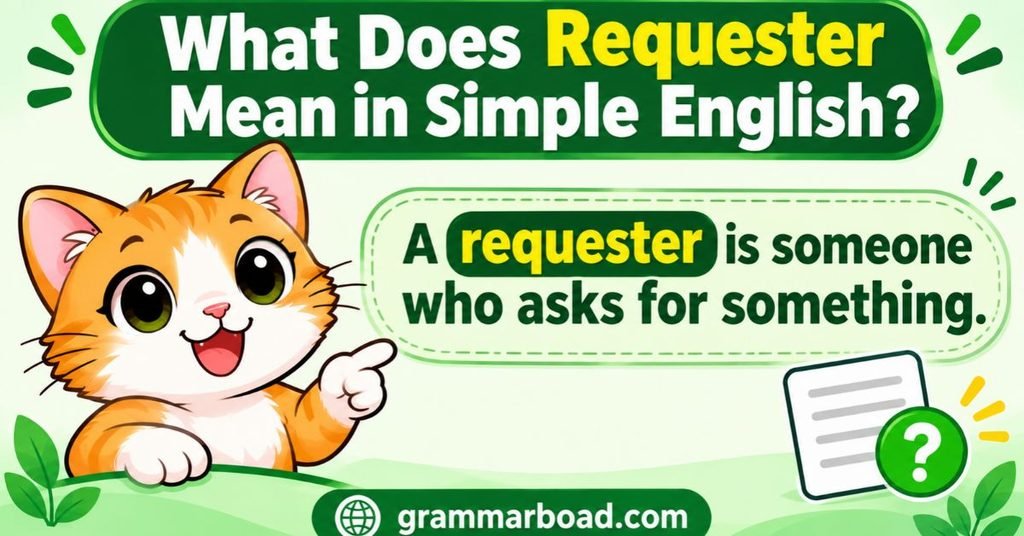
A requester is someone who asks for something, such as information, assistance, permission, or a service.
For example, if you email a company to ask for a replacement product, you are the requester. If an employee asks a manager for additional time to complete a project, that employee is also the requester.
The word is common in general and professional communication.
Examples include:
- The requester wants more information about the service.
- The company will contact the requester tomorrow.
- Each requester must provide a valid email address.
- The requester received a response from the support team.
Because requester is widely recognized, it is generally a good choice when writing for a broad audience.
The correct choice between Requestor vs Requester depends on the context and the spelling preferred by your organization.
Are Requestor and Requester Both Correct Words?
Yes. Both requestor and requester are used in English, and both can refer to someone who makes a request.
The difference is mainly spelling preference and usage. Requester is more common in general writing, while requestor appears in certain professional, technical, legal, and administrative documents.
It is important not to confuse a less common spelling with an incorrect spelling. If a form or organization uses requestor, there is usually no reason to change it simply because requester is more familiar.
However, when writing an article, email, or general explanation without a specific style requirement, requester is a practical choice.
Is Requestor More Formal Than Requester?
Requestor can sometimes sound more formal or official because it appears in certain administrative, legal, and technical documents. However, this does not mean that requestor is automatically more formal in every situation.
Both spellings can appear in professional writing. A business email, for example, may use requester, while an internal software platform may use requestor as a field label.
The level of formality depends more on the sentence, audience, and document type than on the spelling alone.
If you are preparing a formal document, follow the terminology used by the organization. If there is no specific requirement, requester is a clear and widely understood option.
Is Requester More Common in Modern English?
Requester is generally the more familiar spelling in everyday English. It is commonly used in general explanations, business communication, and descriptions of people who submit requests.
Requestor has not disappeared, though. It continues to appear in some software platforms, technical documents, administrative forms, and organizational terminology.
The best spelling for a particular situation depends on the context. If you are writing for a general audience, requester is usually the safer choice. If you are referring to a specific system that uses requestor, keep the original spelling.
Requestor vs Requester in Legal Documents
Legal documents often use precise terminology. A contract, policy, or official form may define a person making a request as the “Requestor” or the “Requester.”
Once a term is defined, it should be used consistently throughout the document. Changing the spelling halfway through can create confusion, especially when the word is used as a defined term.
For example:
“The Requestor must submit the required documents before the application can be reviewed.”
Another document may use:
“The Requester must provide written confirmation before the request is processed.”
Both examples communicate the same basic idea. When preparing or reviewing legal material, follow the original document and the relevant organization’s drafting rules. Do not change a defined term without a clear reason.
Requestor vs Requester in Business Communication
Businesses regularly handle requests from customers, employees, suppliers, and other organizations. These requests may involve refunds, information, approvals, account access, or services.
In general business communication, requester is a natural choice because it is widely understood.
For example:
- The requester will receive an update after approval.
- Please contact the requester if additional information is needed.
- The requester must confirm the delivery details.
Some companies may use requestor in internal forms or software systems. If your workplace already follows that spelling, keep it consistent in related documents.
Requestor vs Requester in Government Forms
Government forms often ask for information about the person submitting an application or requesting a public service. The relevant field may be labelled “Requester Information” or “Requestor Details.”
The spelling depends on the agency and its preferred terminology. There is no universal rule requiring all government departments to use one form.
If you are completing a form, copy the wording shown on the form. If you are writing instructions for other people, use the same spelling as the official document so that readers can easily identify the correct field.
For example:
“Enter the requester’s full name in the section marked Requester Information.”
This approach keeps your instructions clear and consistent.
Requestor vs Requester in IT and Technology
Both spellings can appear in technology-related writing. A support platform may identify the person who opens a ticket as the requestor, while another platform may use requester.
In software development, the word may also describe a system component that sends a request to another service or server.
For example:
- The requester submitted a password reset request.
- The system notified the requestor when access was approved.
- The application stores the requester’s details.
- The server processes requests from different clients.
When explaining a specific software product, use the spelling shown in its interface or documentation. This helps readers follow your instructions without becoming confused by different labels.
Requestor vs Requester in Emails and Official Letters
In most emails, you can address the person directly instead of repeatedly using requester or requestor. However, these words can be useful when describing someone in a report, forwarded message, or formal letter.
Examples:
- The requester has attached the necessary documents.
- We will contact the requestor after reviewing the application.
- Please send the confirmation email to the requester.
- The requestor should provide the missing information.
For official letters, follow the terminology used by the organization or document you are discussing. If no preferred spelling exists, requester is a suitable general option.
How to Use Requestor in a Sentence
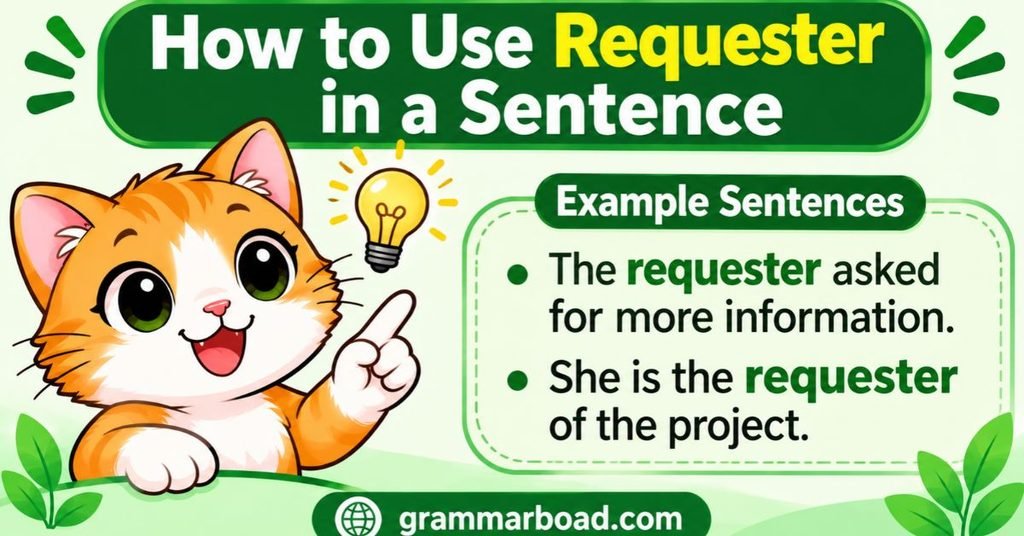
Requestor is used to identify the person or system making a request. It can appear in sentences about applications, support tickets, official forms, and administrative processes.
Here are some examples:
- The requestor must complete every required field.
- Please confirm the requestor’s email address.
- The system will notify the requestor when the process is complete.
- The requestor submitted an application for additional access.
- Each requestor must provide the correct identification details.
- The administrator contacted the requestor for clarification.
These examples show how requestor works as a noun. Remember that it is an accepted spelling, even though requester is more common in general writing.
How to Use Requester in a Sentence
Requester is a noun that identifies the person or system making a request. It is suitable for everyday communication, professional emails, and general English writing.
Here are some examples:
- The requester asked for a copy of the report.
- The company sent an update to the requester.
- Each requester must submit a separate application.
- The manager approved the requester’s application.
- The requester received a confirmation number.
- Please contact the requester if the information is incomplete.
When writing for a general audience, requester is usually the more familiar option.
Singular and Plural Forms of Requestor and Requester
Both words follow the regular English rule for forming plurals. Add -s to make either word plural.
| Form | Requester | Requestor |
| Singular | Requester | Requestor |
| Plural | Requesters | Requestors |
| Singular possessive | Requester’s | Requestor’s |
| Plural possessive | Requesters’ | Requestors’ |
Examples:
- Singular: The requester submitted the form.
- Plural: The requesters submitted their forms.
- Singular possessive: The requester’s details are missing.
- Plural possessive: The requestors’ applications were reviewed.
Remember that an apostrophe is needed for possessive forms, not for ordinary plurals.
Also Read This:https://grammarboad.com/antithesis-vs-juxtaposition/
Related Words: Request, Requested, and Requesting
Requestor and requester belong to the same word family as request, requested, and requesting. Understanding these related forms can help you use them correctly.
- Request (noun): Something that a person asks for. Example: “She submitted a request for a refund.”
- Request (verb): To ask for something. Example: “I request additional information.”
- Requested: The past-tense or past-participle form of request. Example: “The customer requested a replacement.”
- Requesting: The present participle of request. Example: “He is requesting permission to leave early.”
- Requester: A person or system that makes a request.
- Requestor: An accepted alternative spelling for a person or system that makes a request.
These words have related meanings, but they do not all perform the same grammatical role. Request can be a noun or a verb, while requester and requestor are nouns.
Easy Tips to Remember Requestor vs Requester
If you often confuse these spellings, a few simple reminders can help.
- Use requester as your default: It is the more familiar form in general English.
- Remember the -er ending: Think of words such as writer, teacher, and speaker.
- Follow the original wording: If a form or software system uses requestor, copy that spelling.
- Check your style guide: Your employer or publisher may have a preferred spelling.
- Avoid mixing the forms: Choose one spelling and use it throughout the same document.
- Focus on the meaning: Both words identify the person or system making a request.
The easiest rule is to use requester when there is no special requirement and requestor when a document or organization specifically uses that form.
FAQs
1. What is the difference between requestor and requester?
The main difference between Requestor vs Requester is their spelling preference and usage, not their basic meaning. Both words refer to a person, organization, or system that makes a request. Requester is more common in general writing, while requestor is an accepted alternative.
2. Is requestor a real word?
Yes. Requestor is an established spelling used in some professional, administrative, legal, and technical contexts. It is less common than requester in everyday English.
3. Which spelling is better: requestor or requester?
Requester is generally the better choice for everyday writing because it is more widely recognized. However, you should follow a specific style guide or document when one is provided.
4. Is requester correct in American English?
Yes. Requester is used in American English. Requestor is also found in American documents and professional settings.
5. Is requestor correct in British English?
Yes. Requestor can also appear in British English. Neither spelling is exclusive to one English-speaking country.
6. Can I use requestor in formal writing?
Yes. You can use requestor in formal writing when it matches the terminology of your organization, document, or industry. The important thing is to remain consistent.
7. What is the plural of requester?
The plural of requester is requesters. For example: “The requesters received confirmation emails.”
8. What is the plural of requestor?
The plural of requestor is requestors. For example: “The requestors must complete the application forms.”
9. Is requestor more formal than requester?
It may sound more official in certain settings, but it is not automatically more formal. The document and its audience determine the appropriate tone.
10. Should I replace requestor with requester when editing?
Not automatically. If requestor is used correctly and consistently, it does not need to be changed. Replace it only when your style guide or document requires requester.
Conclusion
Understanding requestor vs requester makes it easier to choose the right spelling for everyday and professional writing. Both words refer to a person, organization, or system that makes a request, so their basic meanings are the same.
Requester is generally the more common and familiar spelling in modern everyday English. Requestor is an accepted alternative that appears in certain legal, administrative, and technical settings.
When deciding which form to use, consider your audience, follow your organization’s style guide, and match the terminology of any document or software system you are discussing. Most importantly, remain consistent throughout your writing.
Knowing when to use these two spellings can make your professional and everyday writing clearer.
If you are writing for a general audience and have no special spelling requirement, choose requester. It is a clear, familiar, and reliable option.